
\ Room to breathe, in the order-taking morning /
The orders that arrived overnight —are you carrying themalone every morning?
How orders reach you stays the same. Only the work inside your office becomes one.
LINE, email, fax, phone, your own system. From evening to dawn, orders land on different channels. In the morning someone gathers them, reads them, checks them and finishes before the cut-off. Fast, and without a single mistake.
12 questions, about 3 minutes — result by email
If even one of these sounds familiar, Yutoreru is for you.
Three things we hear again and again on wholesale, food and logistics floors.
They arrive scattered
- LINE, phone, fax, a photo of a handwritten note
- In the morning, no one knows what came in where
- So it all gets counted again later
It depends who is in
- Only the veteran knows what “the usual” means
- When they are off, nobody can tell
- So there are more calls back
Everything is done twice
- The order that arrived is typed in again
- Then copied into the sales system
- And every copy is a chance to get it wrong



The person carryingthe morning's orders alone.
Order clerks
- You gather the overnight orders the moment you arrive
- You check "same as yesterday" against last week's slip
- An unprocessed order turns up just before the cut-off
To finish before the cut-off, without mistakes, calmly.
Take the 3-minute check-up first. You get the one move that gives you 15 minutes back tomorrow morning; the result also arrives as a one-page email you can forward to your boss.
Owners
- A clerk told you "I can't keep this up"
- Someone wanted to leave, and the reason was the morning order work
- A customer called you, the owner, because the wrong thing arrived again
A stable way of working that a clerk can carry.
First, send this page to your clerk. The result arrives as a one-page email. A consultation can wait until after that.
"It works because we're used to it" isthe most expensive answer.
One wholesale owner told us that staff were leaving because of the strain of the morning order work.
- 01
Wrong purchase orders
A misread product or quantity is ordered and shipped as is. The customer's call goes to the owner, and trust built over years shakes on one mistake.
- 02
Missed and doubled work
The more channels, the more gets missed or handled twice. Stock and balances stop matching, and someone reconciles them late at month end.
- 03
Knowledge in one head
"That shop's 'usual' means this" and "this customer's cut-off is early" live only in one person's head. A day off stops the work; a resignation loses it.
- 04
And then, resignations
A morning that must be fast and flawless, every day. The strain builds and people leave. New hires reach the same point once they know the job.
「Mornings are gone to this. I can't even eat. It's ten o'clock before things settle down.」
From our interviews. Not a measured result.
The morning's orders,on one screen.
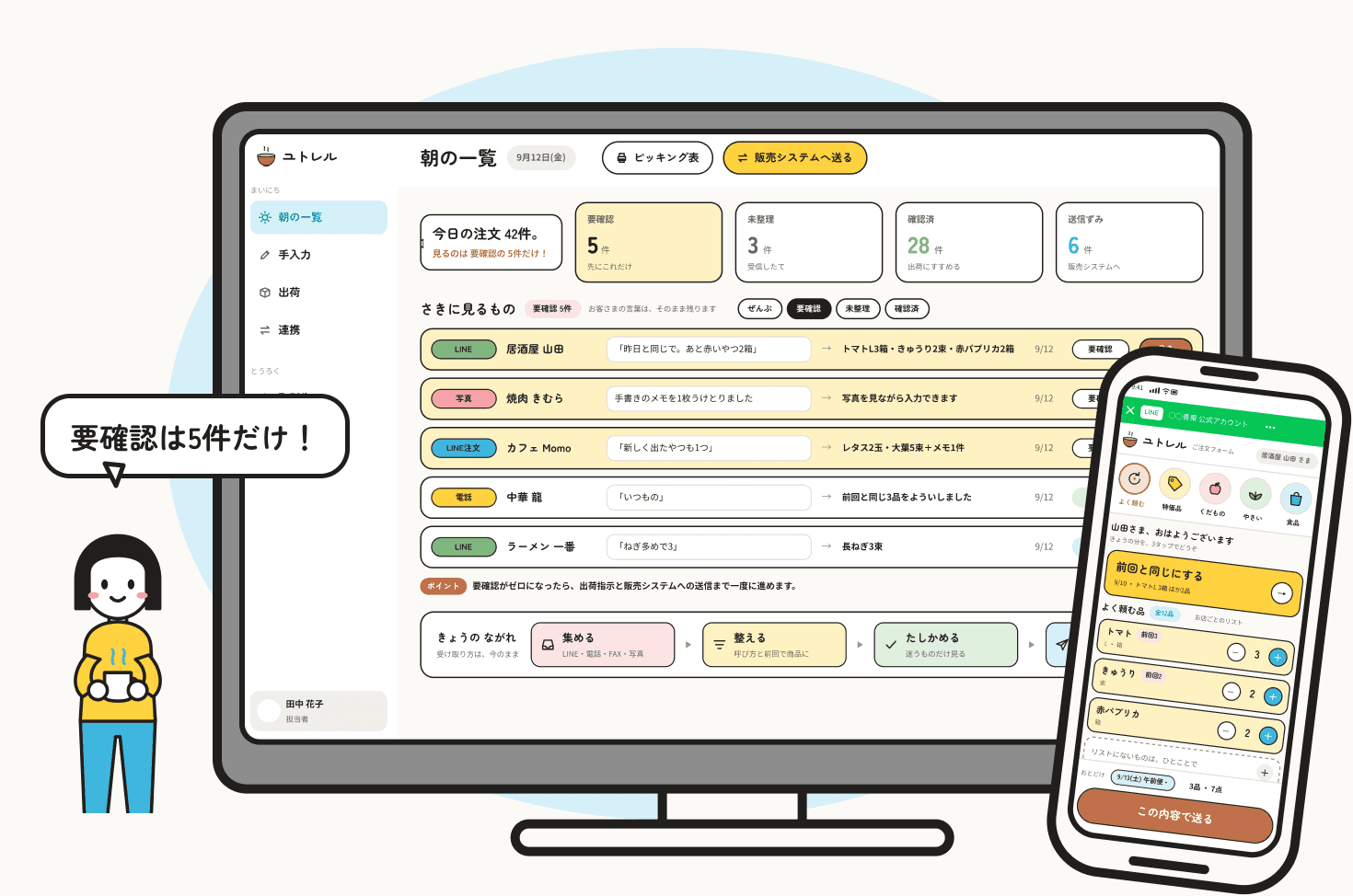
YUTORERU is an order-management system for food and produce wholesalers: orders that arrive by LINE, fax, phone and email land on one list in the morning, and checking flows straight into shipping instructions.
What stays
- How customers order (LINE, email, fax, phone, your own system)
- The sales and accounting systems your office already knows
- Your cut-off times, slips and checking order
What goes
- Gathering from each channel
- Reading it, then typing it in again
- Checking one against the other
Who uses it
- The clerk checks the morning list.
- The owner only watches progress.
- Customers keep sending the way they do today.
Sales and accounting stay as they are; YUTORERU hands the data over. Cut-off times, slips and checking order follow your way of working.
There are only four things to do.
Your customers are asked for nothing new. You start with the way orders already reach you.
- 01
Gather
LINE, phone, fax, photos. Orders arrive as they are, and the original wording is never lost.
- 02
Sort
“The usual.” “The red ones.” From that customer's wording and their last order, Yutoreru proposes the item and the quantity.
- 03
Confirm
Only the uncertain ones are flagged. The clerk looks at those alone, and confirms in one click.
- 04
Hand over
Picking list, delivery note, shipping CSV. To your sales system by CSV or API.
This is all there is to look at.
On the left, the clerk's screen. On the right, the LINE order form — for the customers who want it.
The clerk's screen
One list, opened first thing in the morning.
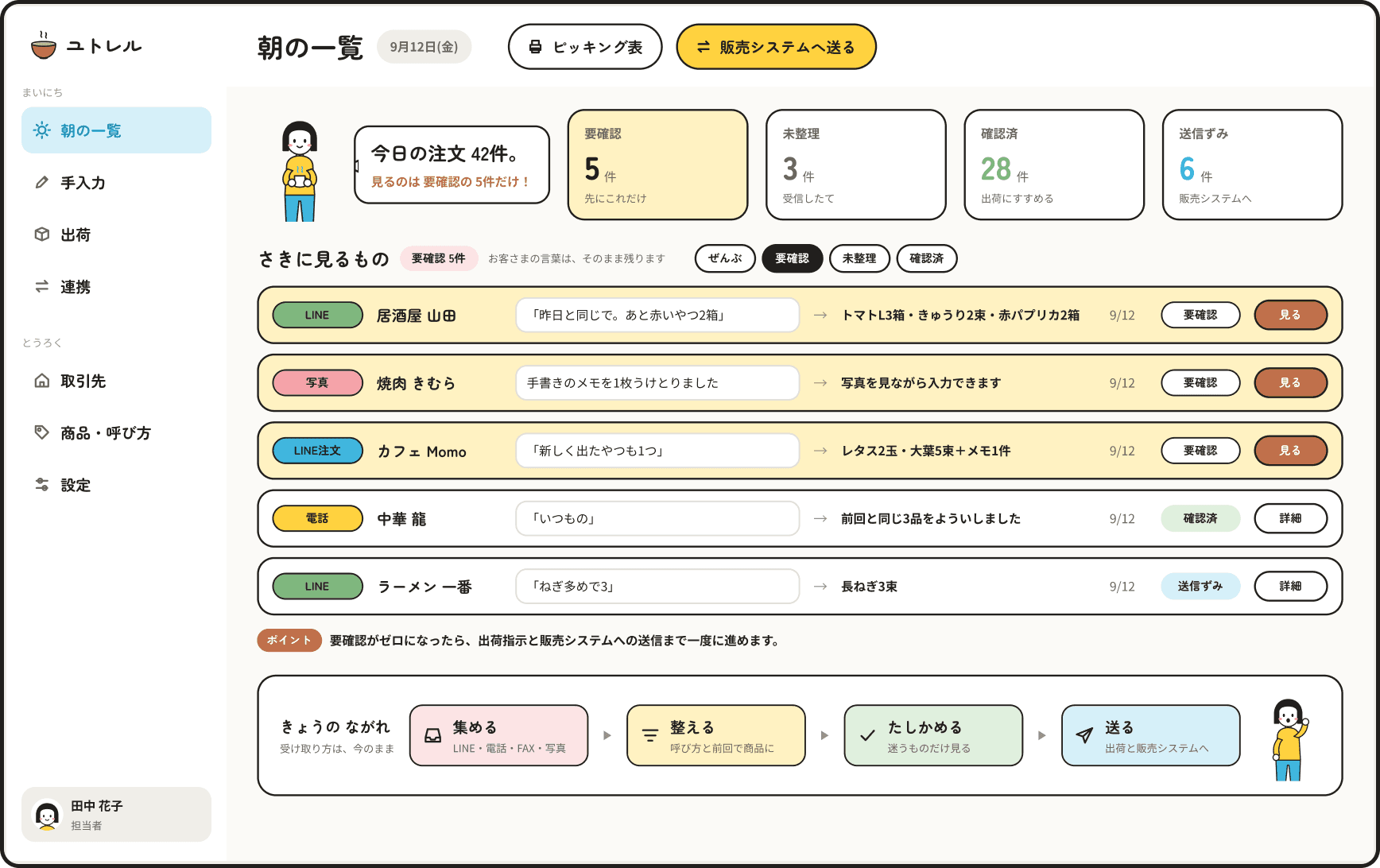
- The customer's own words stay on the row
- Only the flagged orders are pinned to the top
- Once confirmed, it goes to shipping and to the sales system
The customer's screen
Three taps, inside LINE.
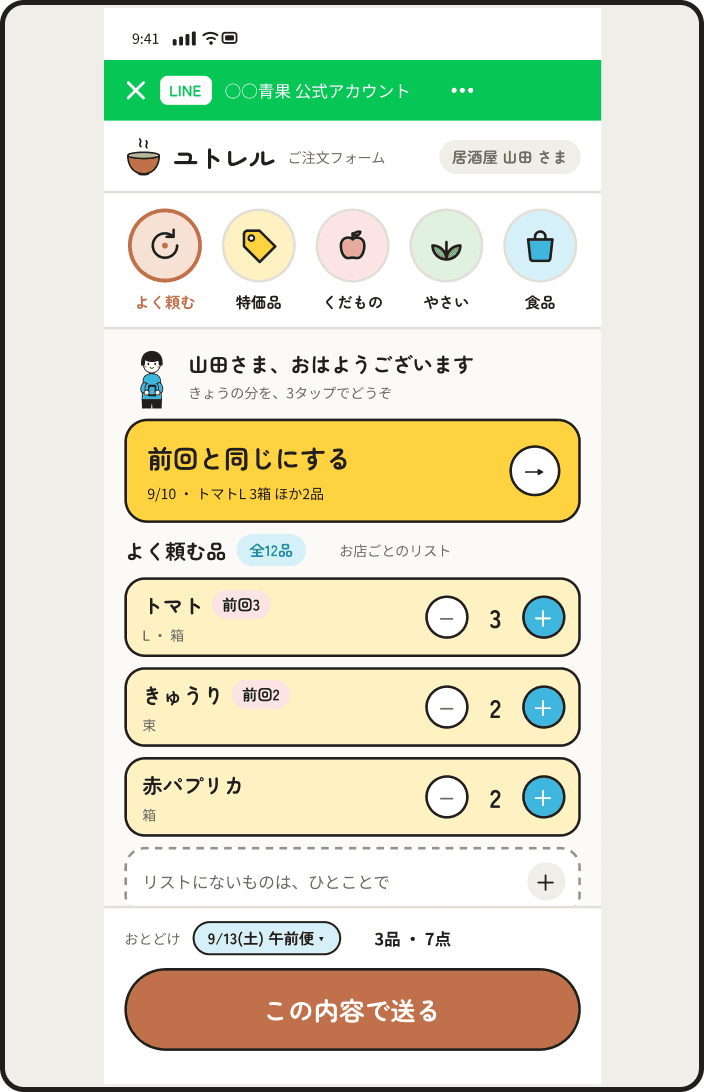
- No app, no account to create
- “Same as last time” is one tap
- Anything not on the list can be typed in a sentence
This is how eight in the morning changes.
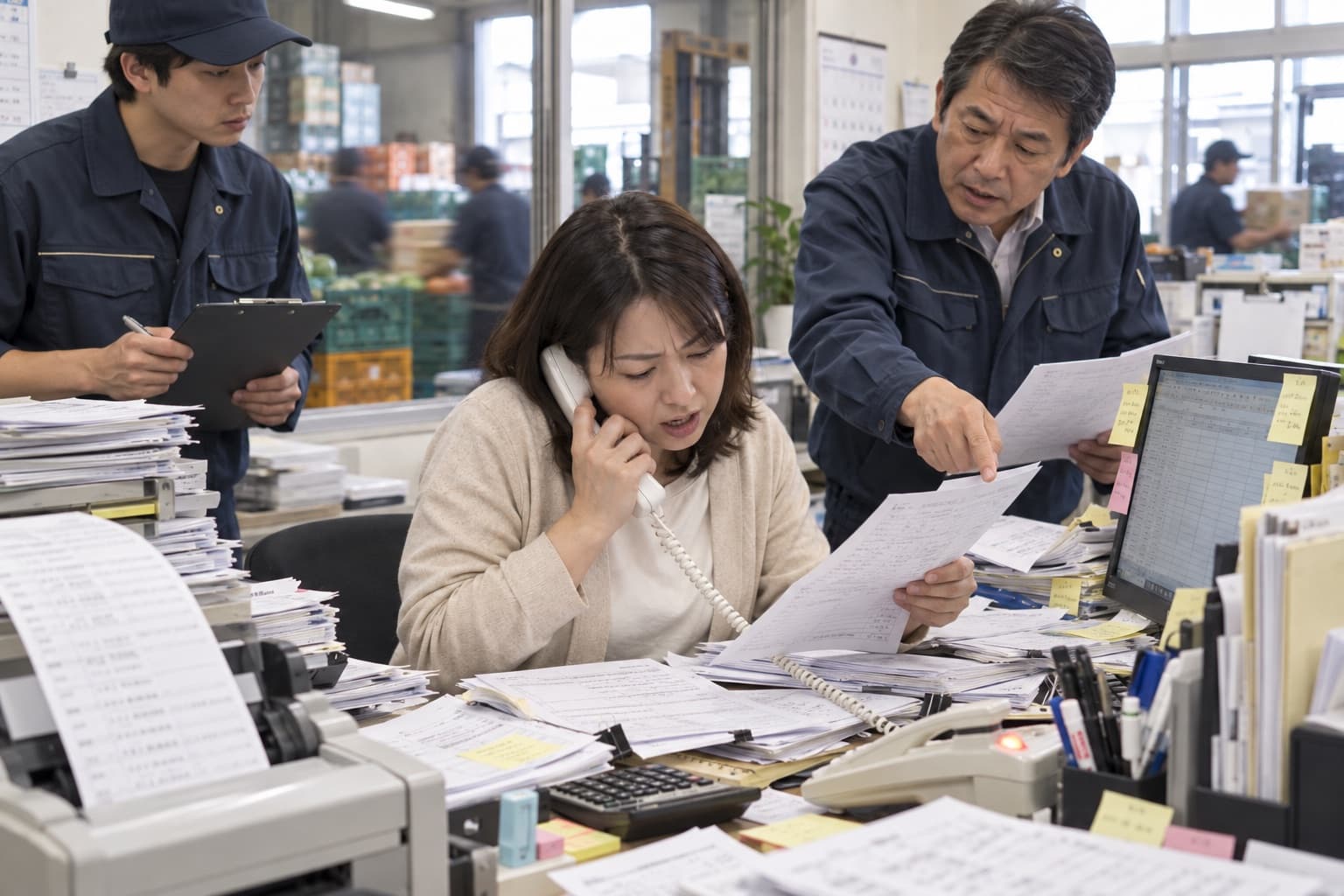
The phone and the fax ring at once.
- Hunt for the paper. Call back. Count it again.
- Half the day's energy is gone before the day starts.
- Missed and misheard orders mostly happen in this hour.

Open it, and it is already in order.
- Five to decide on. The rest are confirmed.
- Straight through to shipping and the sales system.
- The time that opens up is spent talking to people.
Things to check before you start.
- QIs the check-up really free? Do I need to register?
- Yes. Answer 12 questions to start; we ask for an email only when you collect the result.
- QIf I book a consultation, do I have to buy something?
- No. The consultation checks, together, whether it fits you. Even if you buy nothing, the guide stays yours.
- QCan I keep using the guide after the consultation?
- Yes. The guide is sent when you book and is never taken back.
- QWill our ordering methods or sales system change?
- No. You keep taking orders the way you do; only the order work inside your office comes together. Channels and sales systems are confirmed in the consultation.
- QCan it follow the way our company works?
- Yes. That is the premise. Cut-off times, slips, checking order: we set it up after hearing how you work.
- QHow much does YUTORERU itself cost?
- The rollout plan is quoted once the consultation sets the scope. The setup pack is a small fee and starts with one customer.

Twelve questions, and you know where to start.
About three minutes. Your pattern and the one thing to try today come by email.
Email is only for sending the result